
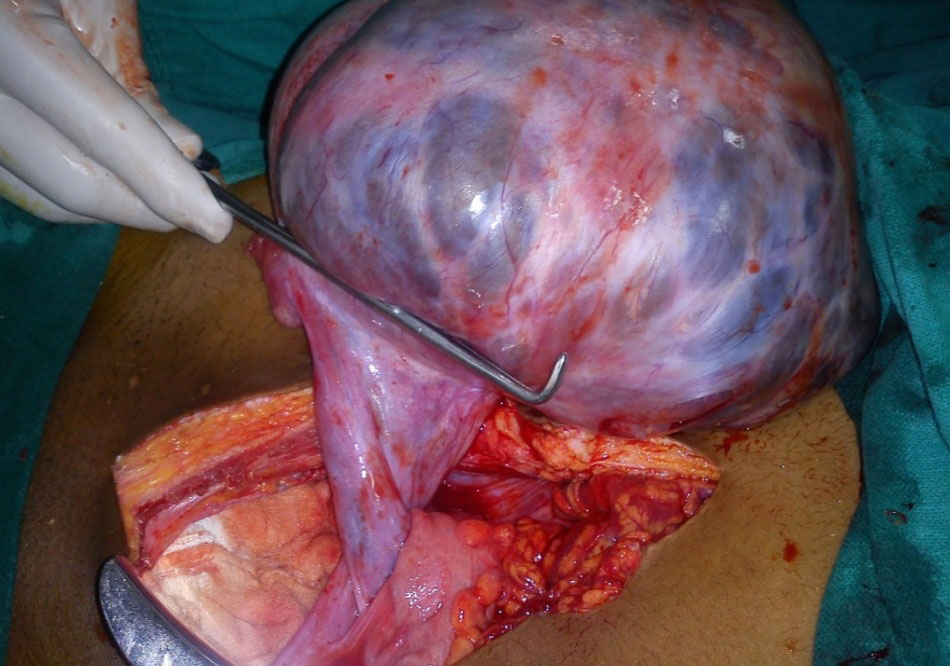
The ovaries are glands that contain the germ cells or eggs. Ovarian cancers begin when normal cells in an ovary change and grow uncontrollably, forming a mass called a tumor. A tumor can be benign (noncancerous) or malignant (cancerous, meaning it can spread to other parts of the body). Removing the ovary or the part of the ovary where the tumor is located can treat a noncancerous ovarian tumor. An ovarian cyst, which forms on the surface of the ovary, is different than a noncancerous tumor and usually goes away without treatment. An ovarian cyst is not always cancerous.
Ovarian cancer is the second commonest gynecological cancer in our country. Approximately 28000 new patients are diagnosed every year in India alone.
A risk factor is something that increases your chances of developing a health condition such as cancer. Having a particular risk factor does not mean you definitely will get cancer, just as people without any known risk factors can develop cancer.
Having one elderly relative with ovarian cancer doesn't necessarily increase your risk of ovarian cancer.
Most women with early-stage cancer of the ovary don't have any symptoms. When symptoms occur they may include any of the following
If you have any of the above symptoms it's important to have them checked by your doctor, but remember they are common with many other conditions and most women with these symptoms will not have cancer.
Diagnosis is usually made by clinical examination, CA-125 , a chest X ray and an ultrasound or CT scan(if required). CA125 is a protein that women normally have in their blood. The level may be higher in women with ovarian cancer, as it's sometimes produced by ovarian cancer cells. However, raised levels of CA125 can also be found in some other types of cancer and in women who have other non-cancerous conditions.
All these investigations give an idea about the extent of disease.
The stage of a cancer is a term used to describe its extent and whether or not it has spread beyond its original site. Knowing the extent of the cancer helps the doctors decide on the most appropriate treatment for you. It's often not possible to stage an ovarian cancer before a laparotomy is done and the results of any biopsies are known. In stage I the disease is usually limited to the ovaries and in stage IV it has spread to distant organs like lung, liver, spleen.
The main treatments used for ovarian cancer are surgery and chemotherapy. Choosing the right treatment for you will depend on many factors, including the stage and grade of the cancer, and your age and general health. Once your specialist has all the details about your cancer he or she will be able to discuss the best treatment for your situation.
Though treatment varies according to each woman's situation, generally:
Treatment is usually planned taking into consideration a number of factors. These will include patient's age, general health, blood tests, the type and size of the tumor, what it looks like under the microscope and whether it has spread beyond the ovary (the stage).
Cancer can affect many areas of patient's life such as finances, work, emotions and relationships. Absorbing the news of cancer diagnosis, communicating with the doctor, seeking support are some measures. Don't lose hope, take care of yourself. Survivors can help other people affected by cancer. Campaign for a better deal, give your time, share your experiences or make a donation.
Screening is a method to detect the disease early so that they can be treated more effectively. Currently routine screening for ovarian cancer is not recommended. However, women are high risk may get a vaginal ultrasound and CA-125 test done every six monthly.